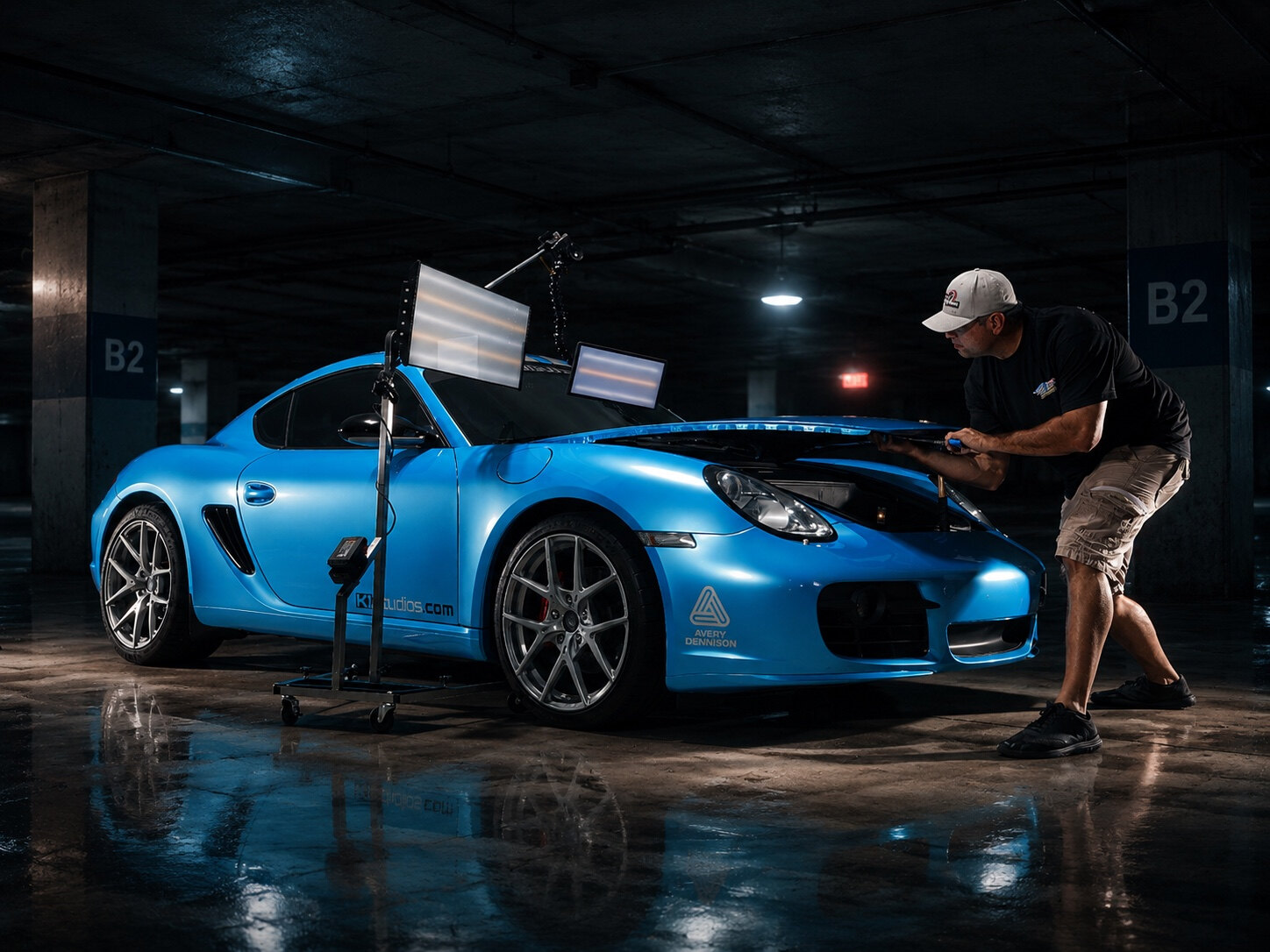

The first month is mostly being wrong on purpose.
I have been in paintless dent repair since 1991 and I have trained technicians all over the world. Here is the part most training companies keep out of the brochure. This trade is not for everyone, and that has almost nothing to do with talent.
Most people who wash out were never short on ability. They were short on information. Nobody told them what the work actually asks of a person, what the first year really looks like, or that three quarters of the job happens nowhere near a panel. So before you spend a dollar with me or with anybody else, read this. If you still want it after that, you are probably one of the ones who makes it.
Is paintless dent repair the right trade for you?
PDR is right for you if you finish what you start, because follow-through predicts who survives this trade far better than talent does.
Ask yourself one question and answer it honestly. When you start something difficult, do you finish it. Not sometimes. Do you finish it. Every technician I have watched build a real living in this trade had that one trait, and almost every person who quit was missing it. Age had nothing to do with it. Hand skill had nothing to do with it.
The reason it matters so much here is that PDR gives you nothing for months. You will push a dent and make it worse. You will chase a low spot across a door and end up with three high spots and a story about why the panel was already bad. Your confidence will drop through the floor and climb back up and drop again. If you need a win every week to keep going, this trade will break you before it pays you. If you can stay with something that is beating you, you have the only thing that cannot be taught.
What stops younger students, and what stops older ones?
Younger students are usually stopped by expectations and concentration, and older students are usually stopped by outside pressure they carried into the shop with them.
Younger people arrive having watched a thirty second video of a dent disappearing, and they expect day one to look like that. It does not. If you have never held a job where the result depended entirely on you, PDR will be the hardest thing you have done. The failure rate at that age is not about intelligence. It is about whether you can hold your attention on one square foot of metal for two hours without your mind wandering off.
Older students bring a different weight. Bills, a family, a spouse who is quietly nervous about a career change at forty five. That is normal and it is workable, but only if it is handled before you get here. I have watched capable adults lose two weeks of training because a problem at home was riding in the car with them every morning. Get your support system settled first. Learning a trade from zero is unfamiliar ground already, and it is no place to also be carrying something unresolved.
Why do some of the best technicians earn the least?
Because about a quarter of this trade is the repair and the other three quarters is promoting yourself and educating the customer, and almost every school only teaches the quarter.
Some of the weakest technicians I know out-earn some of the strongest. That used to bother me. It stopped bothering me once I understood what was really happening. A finished paintless dent repair looks like nothing ever happened, which means the customer cannot see what they bought unless you tell them. The technician who can explain the work in two sentences at the car will charge more and book more than the better repairman standing silently next to him.
You do not have to be the best technician. You have to be good enough that the work holds up, then be the smartest one in your market at helping people understand why it matters. Nobody says that on day one because it is not what a student thinks they are paying for. It is still the truth, and I would rather hand it to you now than have you learn it in year two. I wrote the long version in do you have to be the best PDR technician.
Why do students ruin repairs when they get tired?
Fatigue arrives before you notice it and the instinct is to push harder instead of stopping, so the fix is a deliberate ten minute break where the eyes stop concentrating.
This is the single most useful thing I teach, and I have never heard another trainer mention it. A student will work a dent for ninety minutes, start losing the read, and respond by bearing down harder. They do not know they are tired. They think the panel got difficult. That is the exact moment the mistakes happen, and the mistakes made while tired are the expensive kind.
The correction is small and it works every time. Stop. Walk outside. Call somebody. Ten minutes where your eyes are not concentrating on anything. The reflection board burns your focus in a way ordinary work does not, and the eyes need to release before the brain resets. Students come back and see the dent they could not read fifteen minutes earlier. Small breaks, big difference. Learning when to walk away from a panel is a skill, and it is worth as much as anything you will do with a rod.

The read goes before the hands do. Stop when it does.
How do you choose a PDR trainer without getting burned?
Check how long the trainer has actually worked in the trade, call the students they trained, and find out how many people will be in the room with you at one time.
There are school mills in this business. You call, you get a salesperson, and that salesperson gets paid whether or not you ever fix a dent again. Some of these operations run out of a backyard or a barn. Kentucky has one. They put ten or twelve people in a room, hand everybody a kit, run a demo at the front, and send you home confused with a case of tools you cannot name. You did not buy training. You bought a trip.
Do the homework you would do before buying a car. How long has this person been successfully doing PDR, not teaching it. Are they still on the tools today or did they leave the trade for the classroom. Look at their work. Then find students they trained two years ago and ask them the questions that matter. Did the trainer look over your shoulder. Did they care. Do they still pick up the phone. Your foundation decides everything you build after it, and a bad foundation does not show up until you are already out there charging people.
What does training with me cost, and what do you actually get?
Tuition is published and never discounted: $15,000 for two weeks of ten training days, or $27,000 for four weeks of twenty days, excluding tools, airfare, room and board.
I take a maximum of two students at a time. That is the whole model and it is why the number is what it is. When you hit a wall, and you will, I am standing there watching your hands, and after thirty five years I recognize what your specific problem is instead of repeating a generic correction to a room. That is the difference between being taught and being trained. They can copy my recipe. They cannot cook like me.
You work on real customer vehicles, not practice hoods in a barn. Discounts with the major PDR tool brands come with the course, so you get fitted with tools that suit your hands and your reach rather than handed a boxed kit. Steel has memory and a trained push works with it. Aluminum has no memory, so it takes more force and more accuracy at the same moment, and learning that on a real panel with somebody watching is worth more than a year of video. The details are on the two week course and the four week course pages, and the overview lives at PDR training.

Real customer vehicles. Two students, maximum.
What do new PDR technicians get wrong in their first year?
The most damaging first-year mistake is undercutting your price, because a discount you did not need becomes permission to do work you would not otherwise accept.
Here is how it goes. A new tech decides a veteran charges $200 for that dent, so he will charge $100 because he is not that good yet. He just built himself a safety net, and the net catches mediocre work. Charge what the repair is worth and you have skin in the game, which means you will stay on that panel until it is right. Think about the same dent done free for a friend and done for a paying customer. You already know which one gets your best hour.
The other two are taking on more than your hands can handle and quitting practice the moment money starts arriving. What you earn in year one is decided by hours on the tools and whether anybody knows you exist, not by how good your hands are. Put your face on your work from week one. Video yourself, say your name, explain the repair. People do not trust a logo, they trust a person. If you want the full roadmap, read how to become a PDR technician.
Questions, Answered.
Is PDR training worth the money?
It is worth it if you finish what you start and treat it as a foundation rather than a finish line. Training buys you correct habits from day one, which is far faster than unlearning bad ones later. It does not buy you customers, and roughly three quarters of the work of running a PDR business happens away from the panel.
How much does PDR training cost at Dent Time?
Tuition is $15,000 for the two week course, which is ten training days, and $27,000 for the four week course, which is twenty days. Those figures are published and never discounted. They exclude tools, airfare, room and board, and they include discounts with the major PDR tool brands. Training is limited to two students at a time.
Am I too old to learn paintless dent repair?
Age is not the deciding factor, follow-through is. Older students usually struggle with outside pressure rather than ability, so get your finances and your support system settled before you arrive. Younger students usually struggle with expectations and holding concentration on one panel for hours.
Is PDR hard on your body?
The first week is demanding on the shoulders and back while your body adjusts to holding positions. Taught correctly, you use body weight and leverage instead of joints and arms, which is what keeps technicians working for decades. If you cannot bend comfortably or you have significant wrist or joint issues, the work will be taxing.
How do I avoid a bad PDR school?
Find out how long the trainer has worked in the trade rather than taught it, whether they are still on the tools, and how many students share the room. Then contact people they trained a year or two ago and ask whether the trainer still answers the phone. A large class with a salesperson on the front end is a warning.
What decides how much a new PDR technician earns?
There is no honest single number, and anybody quoting you one is selling something. It comes down to hours on the tools plus marketing yourself so people know you exist, and it is never explained by superior hand skill. Undercutting your price is the fastest way to land at the bottom of that range.